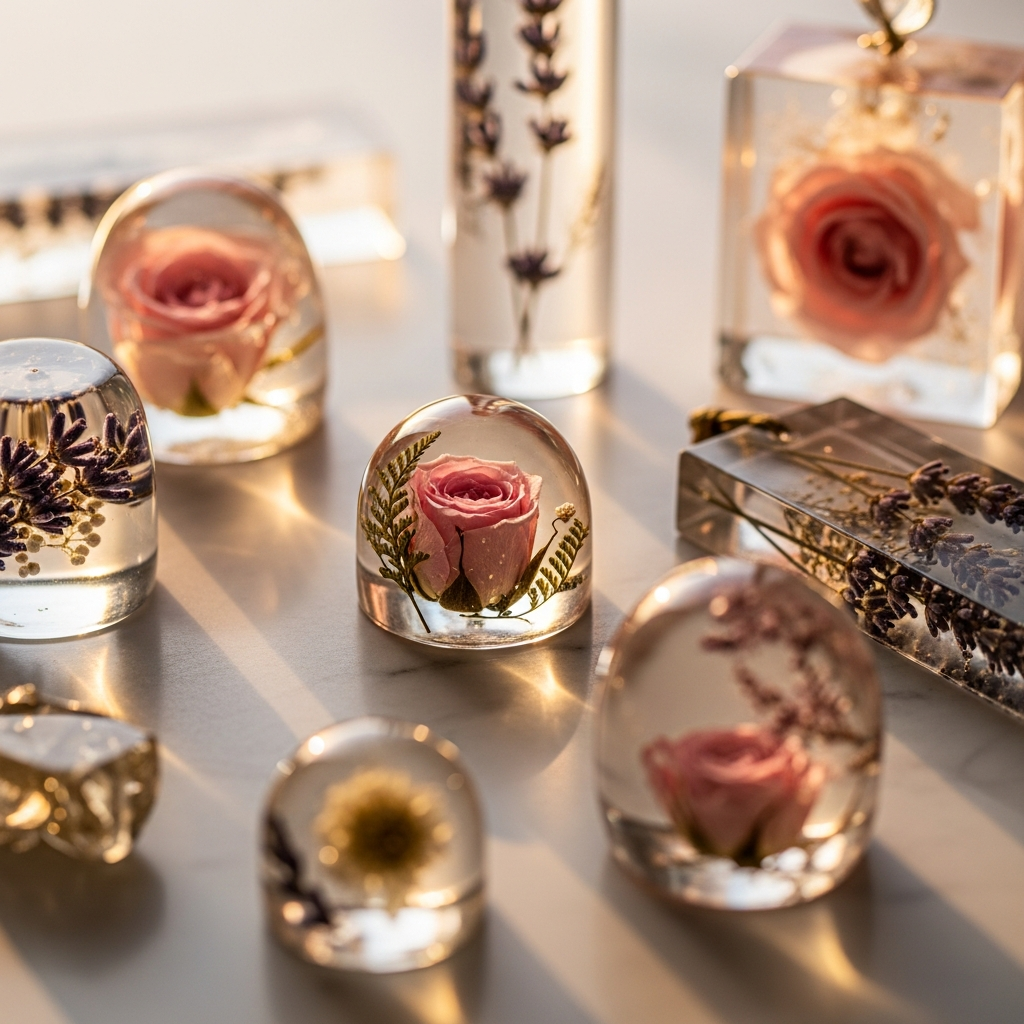
Resin is one of the most magical (and most addictive) crafts out there. It turns flowers, photos, and keepsakes into glassy, permanent pieces. It's also one of the easiest crafts to mess up if you skip the basics — so here's what we wish every beginner knew.
The two main types of resin
- Epoxy resin — Mixed in two parts (resin + hardener), usually by exact ratio. Great for coasters, trays, jewelry, and larger pours. Longer working and cure time (hours to days).
- UV resin — Cures in minutes under a UV lamp. Perfect for small, thin pieces like jewelry and charms; not ideal for thick pours.
What you need to start
- Resin + hardener, measured precisely (a kitchen scale or graduated cups)
- Silicone molds (coasters, trays, bookmarks, shapes)
- Nitrile gloves and a respirator — resin fumes are no joke; work in a ventilated space
- A heat gun or small torch to pop bubbles
- Mixing cups, stir sticks, and a level surface
The #1 beginner problem: bubbles
Bubbles come from over-vigorous mixing and cold resin. Stir slowly and thoroughly, warm your resin bottles in warm water before pouring, and pass a heat gun lightly over the surface after pouring. Patience beats speed every time.
Preserving flowers in resin
This is where resin gets emotional — turning a wedding bouquet, a funeral flower, or a baby's first bloom into a forever keepsake. The key is that flowers must be fully dried first (air-dried, pressed, or silica-dried). Fresh flowers contain moisture that will brown and rot inside cured resin. Dried blooms are then arranged in molds and encased in clear resin.
It's a careful, time-intensive process — which is exactly why many people have it done professionally. Our Bloom Forever keepsakes preserve meaningful flowers into pieces you'll keep for decades.
Safety first, always
Uncured resin is an irritant. Always wear gloves, protect your skin and eyes, ventilate the room, and keep it away from kids and pets until fully cured. Cured resin is inert and safe to handle.
Want a custom resin keepsake without the learning curve? Tell us about your flowers or idea and we'll handle the rest.
Frequently asked questions
How long does resin take to cure?
Epoxy resin is usually touch-dry in 12–24 hours and fully cured in 24–72 hours, depending on the brand and thickness. UV resin cures in minutes under a lamp.
Can you put fresh flowers in resin?
No — fresh flowers hold moisture that browns and rots inside resin. Flowers must be fully dried (pressed, air-dried, or silica-dried) first.
Why is my resin still sticky or bendy?
Usually an inaccurate mix ratio or under-mixing. Measure precisely, stir thoroughly (scraping sides and bottom), and cure at room temperature.
Is resin safe to use at home?
Yes, with precautions: wear nitrile gloves and a respirator, work in a ventilated area, and keep it away from children and pets until cured. Cured resin is safe to handle.