You just got handed the next corporate event. Leadership wants memorable and engaging. The budget says otherwise. That gap is the whole job, and you are not alone in it. Roughly 65% of event planners are already trimming their requirements to fit stretched budgets. And the events themselves matter more than ever. U.S. employee engagement now sits at 31%, a 10-year low. A well-run event is one of the few levers that actually moves that number.
The fix is not a bigger budget. It is smarter styling. A cohesive, branded experience reads as intentional and high-end, even when every dollar is accounted for. Here is a step-by-step process to style a corporate event that wows the room without wrecking the budget.
| Provider | Best For | Customization Level | Starting Price | Key Feature |
|---|---|---|---|---|
| Bart’s & Crafts | Cohesive event styling | Fully coordinated packages | $35 (Work Wins Box) | Done-for-you aesthetic cohesion |
| Swag.com | Bulk branded merchandise | Item-level logo application | Varies by item | Large catalog of promotional items |
| Packed with Purpose | Social-impact gifting | Curated gift boxes | Around $40 per box | Gifts that support non-profits |
| Zazzle | DIY customization | Per-product design upload | Varies by item | Marketplace for one-off items |
| Corporate Gifting by Cratejoy | Subscription-box gifts | Pre-set themed boxes | Varies by box | Recurring gift experience |
Phase 1: Define Your Strategy & Secure Your Budget
Colors and catering come later. Strategy comes first. A clear plan guides every decision and makes leadership buy-in far easier to win.
Step 1: Set Clear, Measurable Goals
Why are you hosting this event? That answer drives every choice that follows. “Throw a party” is not a goal. Get specific. Are you trying to:
- Strengthen the employee experience (EX) and combat burnout?
- Celebrate a major company milestone or achievement?
- Impress and retain key clients?
- Launch a new product or initiative?
- Drive team bonding and cross-departmental networking?
A concrete goal, like “lift employee-experience scores 15% in post-event surveys,” gives your corporate event styling a purpose. It turns expenses into investments.
Step 2: Establish a Realistic, Line-Item Budget
“Fixed budget” sounds like a cage. Treat it as a creative constraint. Break the number into categories so you know where every dollar lands. Common line items:
- Venue rental
- Food & beverage
- AV / tech (microphones, projectors)
- Entertainment
- Styling & decor (signage, centerpieces, linens)
- Gifts & favors
- Invitations & communications
Give Styling & Decor its own line. That single move legitimizes it. This is not fluff. It is a core part of the attendee experience.
Step 3: Align with Stakeholders
Bring your goals and draft budget to the decision-makers. You are not asking permission. You are building a coalition. Frame the plan around what they care about. Show how a well-styled event hits the business goals from Step 1. Even a simple visual proposal helps them see it and approve the resources.
Phase 2: Craft Your Event’s Unique Aesthetic
An aesthetic is more than a color scheme. It is the story your event tells. That story separates a forgettable corporate function from an experience people remember.
Step 4: Choose a Central Theme or “Vibe”
Skip the tired themes. Instead of a generic “luau,” try “Tropical Modern”: clean lines, lush greenery, sophisticated gold accents. Your theme should feel like an extension of your company culture. A few directions:
- Modern Minimalist: sleek, monochromatic, built around typography and clean space.
- Luxe Industrial: exposed brick, metal accents, warm Edison lighting, rich textures.
- Eco-Chic: natural materials, recycled paper, living plants, a light and airy feel.
- Art Deco Speakeasy: geometric patterns, jewel tones, a touch of vintage glamour.
The right vibe makes every other design decision obvious.
Step 5: Develop a Visual Mood Board
A mood board is your blueprint. Pull images that capture the vibe using Pinterest, Canva, or a physical corkboard. Collect color palettes, font pairings, textures, lighting, and decor. It is also a communication tool. Share it with vendors, partners, and internal helpers so everyone builds toward the same look.
Step 6: Plan the Full Sensory Experience
An immersive event works all five senses. Map the attendee journey from the moment the invitation lands. Strong corporate event styling accounts for:
- Sight: cohesive branding on everything from the welcome sign to the presentation slides.
- Sound: a curated playlist that matches the vibe, not just the CEO’s favorite rock band.
- Smell: a subtle, pleasant scent in the entryway sets a sophisticated tone.
- Taste: signature cocktails or mocktails that match the event’s color scheme.
- Touch: high-quality paper for menus and name cards, or textured linens on tables.
Phase 3: Execute the Styling with Smart Sourcing
Strategy and aesthetic are set. Now bring them to life. Smart sourcing maximizes impact while cutting cost and effort.
Step 7: Focus on High-Impact, Low-Cost Areas
You do not need to decorate every square inch. Concentrate budget and effort on the focal points guests actually notice:
- The entrance: a branded welcome sign or a clean balloon arch sets the tone on arrival.
- The photo op: a well-designed photo wall gives guests a fun activity, drives social sharing, and puts your branding all over LinkedIn the next day.
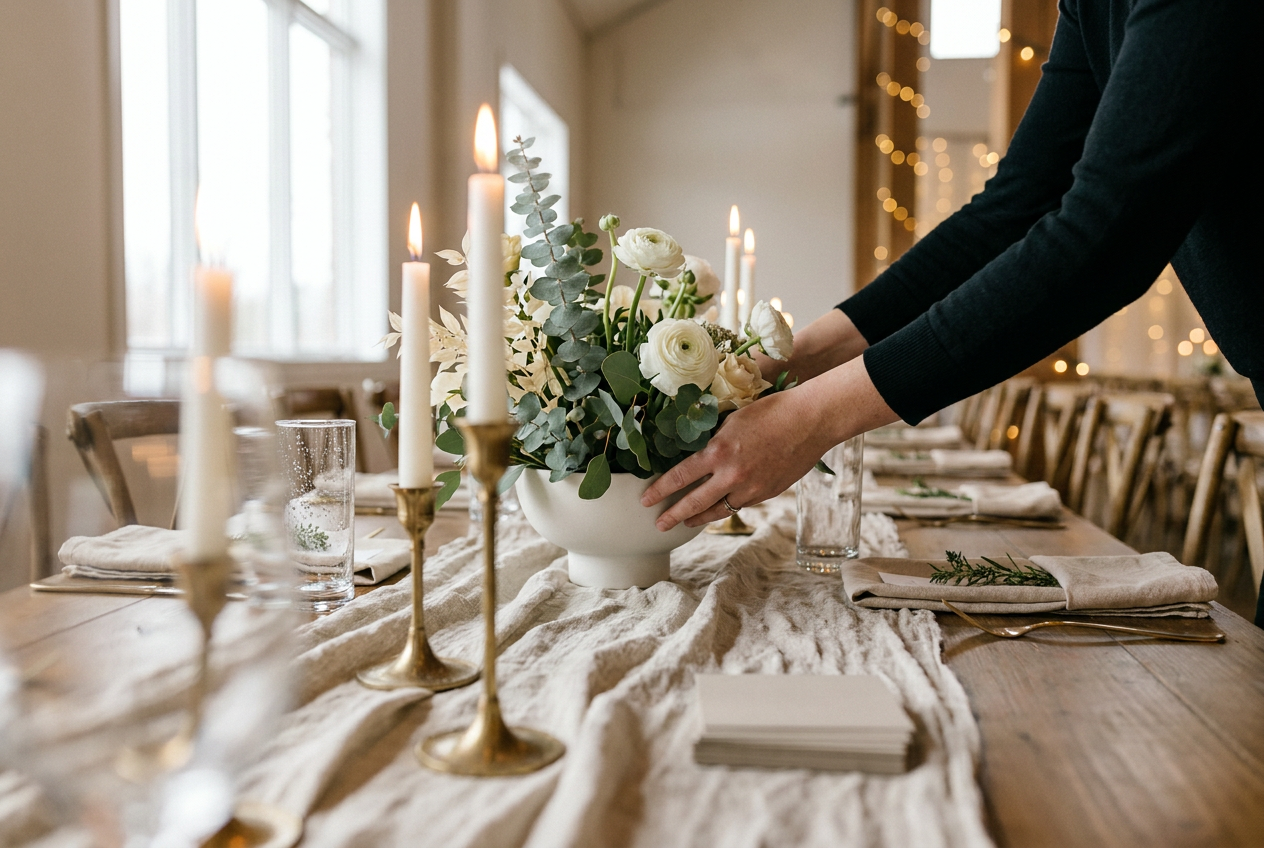
- The tables: skip the florals on every table. Coordinated name cards, themed menus, and one distinctive centerpiece create a premium feel.
Step 8: Find a Partner for Cohesive Materials
Nothing says “last minute” like mismatched materials. The invitation, welcome sign, name tags, table numbers, menus, and thank-you notes should all look related. Coordinating that across separate vendors invites frustration and clashing colors. A partner built for coordinated event packages handles it end to end, so the digital invitation and the physical place card match exactly. If part of your team joins remotely, ship them the same matching kit so the squares on screen feel part of the same room. That coordination is the heart of corporate event styling.
Step 9: Select Meaningful & On-Brand Gifting
The branded pen and stress ball get tossed. A memorable event ends with a gift that is thoughtful, useful, and on-brand. Match the gift to the theme. A wellness retreat calls for a curated box with a candle and artisanal tea. A sales kickoff calls for high-quality desk accessories. The Work Wins Box delivers that curated experience, so employees feel genuinely appreciated instead of processed.
Phase 4: Manage Day-Of Details & Post-Event Engagement
All that planning lands on event day. A little extra prep keeps it smooth and stretches the good energy well past the closing.
Step 10: Create a Styling Run-of-Show
You have a run-of-show for speakers and catering. Build one for styling. This is a setup timeline that names who does what and when. Example: 1:00 PM, linens arrive and hit the tables. 2:00 PM, centerpieces are set. 3:00 PM, place cards and menus go out. That plan prevents day-of chaos and gets your vision executed cleanly.
Step 11: Capture the Content
Your styling work deserves documentation. Assign one person, or hire a pro, to shoot the details before guests arrive. Get the welcome area, the tablescapes, the food display, and the photo wall. Those images fuel future promotion, internal newsletters, and the case you make to leadership.
Step 12: Extend the Experience Post-Event
The event does not end when the last guest leaves. Keep the momentum. Send a post-event survey and a thank-you note in the same branding as the event. Share a curated gallery of the best shots, especially the styled details and photo wall. That final touch reinforces the whole experience and leaves a lasting impression.
Common Challenges of Styling Corporate Events on a Budget
A few obstacles trip up even seasoned planners. Naming them early is how you design around them.
- Event planning is rarely anyone’s actual job. It lands on top of a full role, so the hours vanish fast. A done-for-you partner that ships one coordinated set removes the vendor-juggling that eats those hours.
- Remote attendees can end up watching a party they are not really part of. Ship the same branded kit, snacks, or gift to their door, and give them a live role, so the people on screen share the moment instead of observing it.
- Leadership wants proof, not vibes. Track more than a post-event survey: photo-wall shares, event-hashtag reach, RSVP-to-attendance rate, and follow-up participation all show the event moved something real.
How to Put Your Corporate Event Styling Plan Into Practice
The real decision is not what to add, it is what to skip. Pick the two or three moments guests will actually remember and put your budget there. Keep everything else clean, cohesive, and quiet. That trade is what makes a fixed budget read as intentional rather than thin.
You do not have to juggle it alone. Chasing separate vendors for printing, design, and gifting is exactly where budgets and timelines slip. Bart’s & Crafts delivers a fully coordinated suite, from invitations to day-of signage to appreciation gifts like The Work Wins Box, so every detail matches and you stay focused on the big picture. When it all aligns, the event feels more premium, more intentional, and more memorable. That is what great styling buys you.
Frequently Asked Questions (FAQs)
How can I make a corporate event look expensive on a small budget?
Lean on cohesion and a few high-impact details. Run one color palette and one font family across every material: invitations, signage, menus. Put your money into a single “wow” moment, like a striking photo backdrop or a dramatic entrance, and keep everything else clean and simple. Good lighting also lifts a room for very little cost.
What is the difference between event planning and event styling?
Event planning handles logistics: budget, venue, timelines, vendors, and scheduling. Event styling handles aesthetics: the look, feel, and sensory experience. A stylist builds one cohesive visual story through decor, color, lighting, and every branded material.
How far in advance should I plan corporate event styling?
For a medium-to-large event, start your styling three to four months out. That window gives you time to lock the theme, source partners, and produce custom materials without rush fees. For smaller events or gift boxes, four to six weeks works well.
How can we create a cohesive experience for both in-person and remote event attendees?
Run one aesthetic across both. Send remote guests the same branded kit or gift box you use on site, so their screen space matches the room. Mirror the schedule, share a live gallery of the styled details, and give online attendees a clear role, a toast, a game, or a shout-out, so they feel included rather than piped in.
Are custom employee gifts worth the investment?
Yes, when you choose them well. A generic, low-quality item feels like an obligation. A high-quality gift that fits the theme or your company values reads as genuine appreciation. It becomes a lasting reminder of the event and lifts morale and loyalty.
Ready to bring your vision to life?
Custom event bundles, gifts, and keepsakes — coordinated, aesthetic, and made just for you.
Start your order